
Your Garage Door Works Hard — It Deserves Some Attention
Think about how many times your garage door goes up and down in a single day. If you're like most Nashville families, it's probably at least four times — morning commutes, school drop-offs, evening errands, and everything in between. Over the course of a year, that adds up to well over a thousand cycles. Your garage door is the largest moving part of your home, and it takes a beating from daily use, temperature swings, humidity, and the occasional Middle Tennessee storm.
Despite all that wear and tear, garage door maintenance is one of the most overlooked home tasks. Most people don't think about their door until it starts grinding, gets stuck halfway, or refuses to open on a Monday morning. By then, a simple tune-up has turned into an expensive repair — or worse, a safety hazard.
So how often should you actually service your garage door? And what does proper maintenance look like? Let's break it down.
The Short Answer: At Least Once a Year
At a minimum, your garage door should receive a professional inspection and tune-up once a year. Think of it the same way you think about your HVAC system or your car — regular maintenance prevents breakdowns, extends the life of the equipment, and keeps everything running safely.
For most homeowners in Nashville and the surrounding areas like Brentwood, Franklin, and Murfreesboro, an annual service visit is enough to catch small problems before they become big ones. However, there are situations where you may want to schedule service more frequently.
When Twice-a-Year Service Makes Sense
- High-usage doors: If your garage door cycles more than six times a day — common in busy households or homes where the garage is the primary entry point — the hardware wears faster and benefits from a mid-year check.
- Older garage doors: Doors that are 10 years old or more are more prone to spring fatigue, worn rollers, and cable fraying. A second annual visit can catch issues that develop between regular appointments.
- Commercial properties: Businesses in Nashville that rely on overhead doors for warehouses, loading docks, or storefronts should schedule service at least twice a year, if not quarterly, depending on usage volume.
- After severe weather: Tennessee storms can knock tracks out of alignment, damage weatherstripping, and stress the door's structural components. If your area gets hit with high winds, hail, or heavy storms, it's smart to have things inspected afterward.
What Does a Garage Door Tune-Up Actually Include?
A lot of homeowners wonder what they're paying for when they schedule a maintenance visit. A thorough garage door tune-up is more than just spraying some WD-40 on the tracks. Here's what a proper service appointment should cover:
Visual Inspection
A trained technician will examine every component of your garage door system — panels, tracks, springs, cables, rollers, hinges, brackets, and the opener. They're looking for signs of wear, rust, damage, or misalignment that could lead to problems down the road.
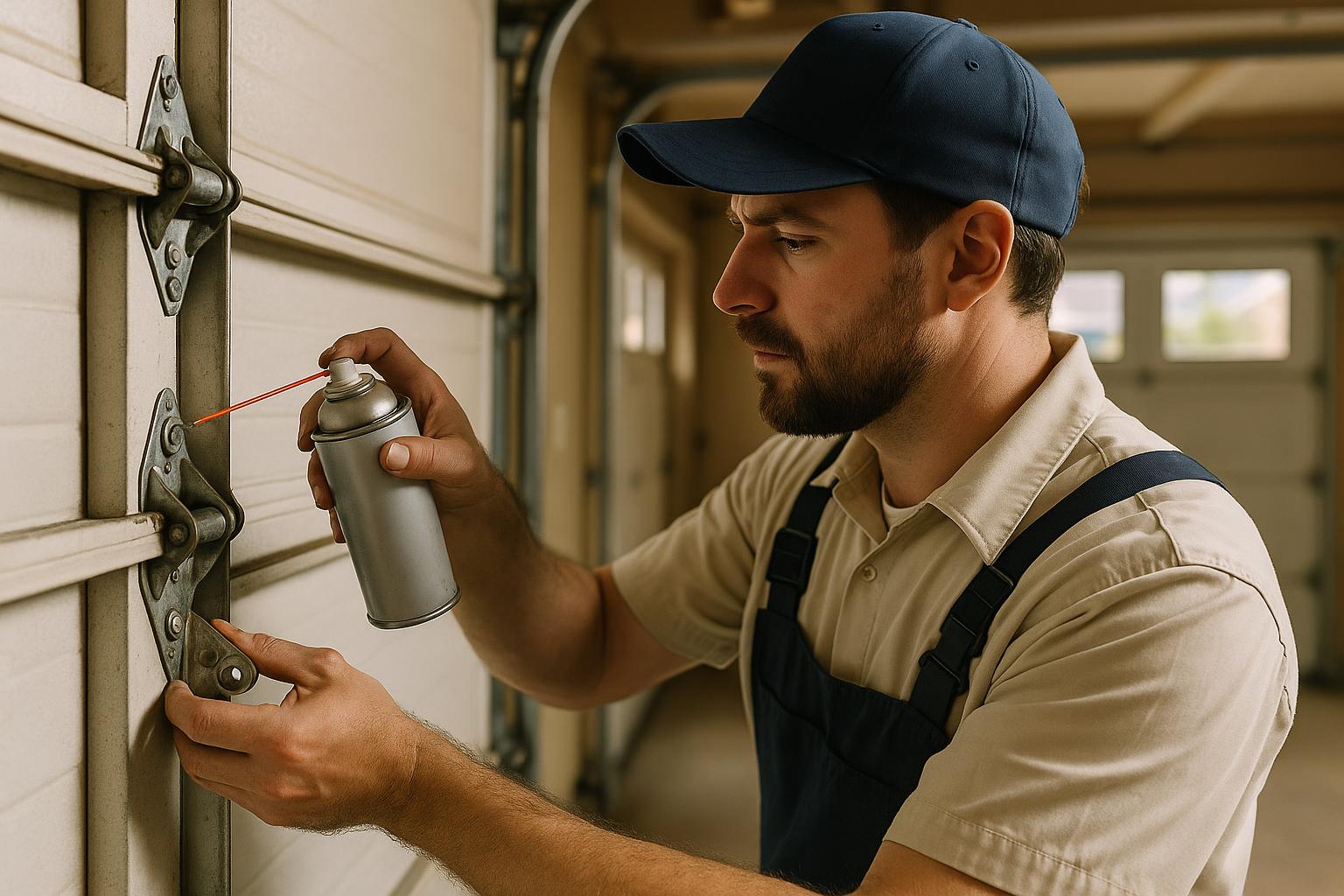
Lubrication
Moving parts need proper lubrication to operate smoothly and quietly. This includes the springs, rollers, hinges, and bearing plates. The right lubricant matters too — a garage door-specific lubricant performs much better than general-purpose sprays.
Balance Testing
An unbalanced garage door puts extra strain on the opener and the springs, shortening their lifespan. During a tune-up, the technician will disconnect the opener and manually lift the door to check its balance. A properly balanced door should stay in place when lifted halfway. If it falls or rises on its own, the springs need adjustment.
Safety Feature Testing
Modern garage doors have two critical safety features mandated by federal law: the auto-reverse mechanism and the photoelectric sensors. Both should be tested during every service visit to make sure they're functioning correctly. This is especially important for families with children or pets.
Hardware Tightening
The constant vibration of a garage door in motion loosens bolts and brackets over time. A technician will tighten all the hardware to keep everything secure and reduce unnecessary noise.
Weatherstripping Check
The rubber seal along the bottom of your door and the weatherstripping around the frame keep out rain, pests, dust, and drafts. Nashville's humid summers and chilly winters make intact weatherstripping especially important for energy efficiency and protecting whatever you store in your garage.
Opener Evaluation
The technician should also check your garage door opener — testing the force settings, inspecting the drive mechanism, and making sure the remote and wall controls are working properly. If your opener is outdated or showing signs of strain, they can let you know before it fails completely.
What You Can Do Between Service Visits
Professional maintenance once or twice a year is essential, but there are a few simple things you can do on your own to keep your garage door in good shape between appointments:
- Watch and listen: Pay attention every time you use your door. Does it move smoothly? Are there any new sounds — grinding, scraping, popping? Changes in how your door sounds or moves are often the first sign of a developing issue.
- Keep the tracks clean: Wipe down the inside of the tracks with a damp cloth to remove dirt and debris. Don't lubricate the tracks themselves — that can actually cause the rollers to slip.
- Test the auto-reverse: Place a roll of paper towels on the ground in the door's path and close it. The door should reverse when it contacts the object. If it doesn't, call a professional immediately.
- Check the weatherstripping: Look at the bottom seal and side seals for cracks, gaps, or deterioration. Replacing worn weatherstripping is inexpensive and prevents bigger problems.
- Clear the area around sensors: Make sure nothing is blocking the photoelectric sensors on either side of the door near the floor. Even cobwebs or dirt buildup on the lenses can cause your door to malfunction.
The Cost of Skipping Maintenance
It's tempting to skip maintenance when everything seems to be working fine. But the math doesn't lie. A routine tune-up is a fraction of the cost of an emergency spring replacement, a burned-out opener motor, or a door that jumps off its tracks. And those are just the financial costs — a malfunctioning garage door is a genuine safety risk. Hundreds of people are injured by garage doors every year in the United States, and many of those incidents are preventable with regular service.
There's also the inconvenience factor. A garage door that fails on a Friday evening or during a holiday weekend means you're either stuck waiting for emergency service or dealing with a security vulnerability until someone can get out to fix it. Scheduled maintenance happens on your terms, at a time that works for you.
Schedule Your Tune-Up With Nashville Overhead Door Co
Whether it's been a year since your last service visit or you honestly can't remember the last time anyone looked at your garage door, now is a great time to get on the schedule. At Nashville Overhead Door Co, we provide thorough garage door maintenance and tune-ups for homeowners across Nashville, Hendersonville, Gallatin, and the surrounding communities. We show up on time, walk you through anything we find, and make sure your door is running safely and smoothly before we leave.
Don't wait for a breakdown to remind you that your garage door needs attention. Give us a call or book a service appointment online — your future self will thank you.