
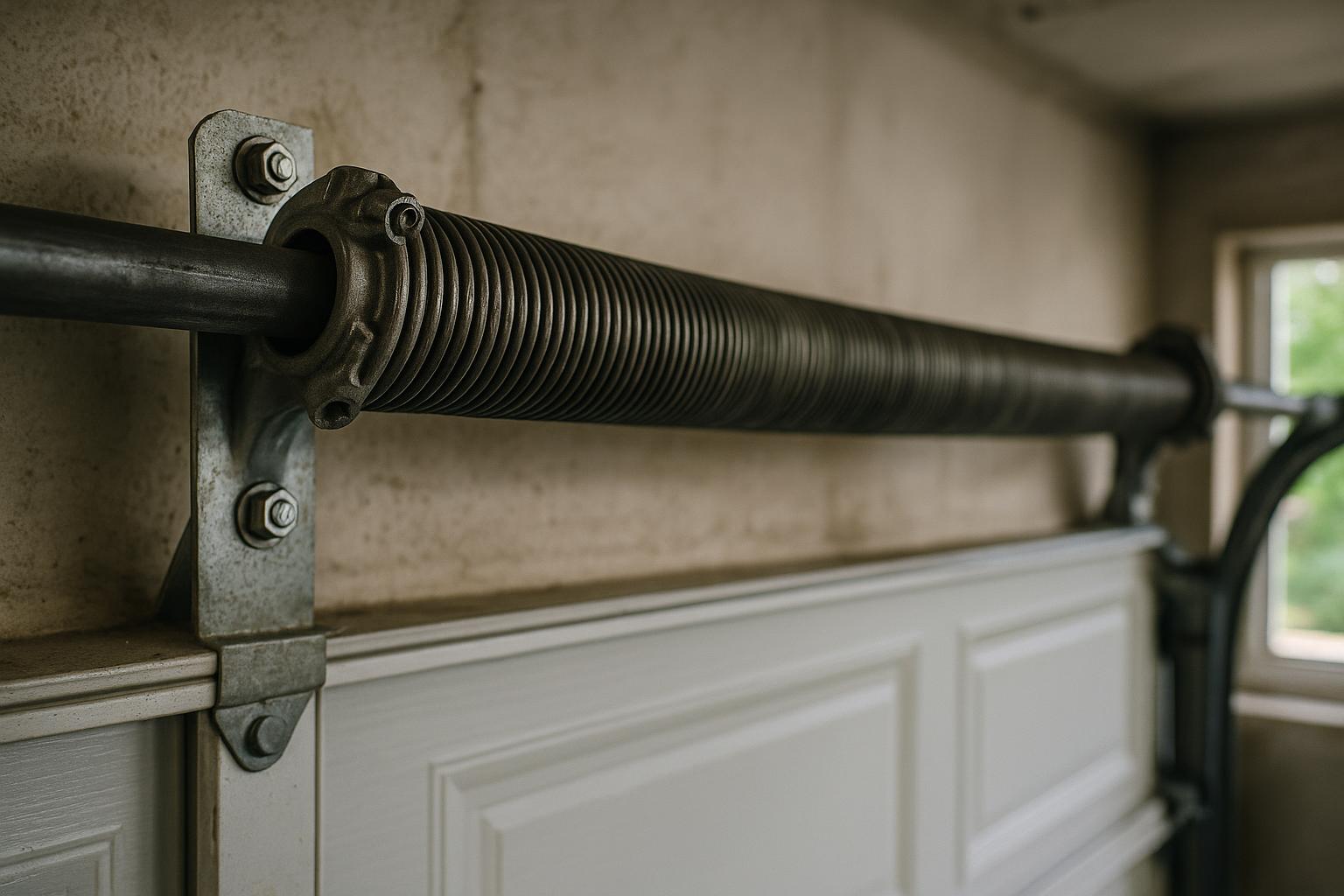
Your Garage Door Springs Are Working Harder Than You Think
Most Nashville homeowners open and close their garage door at least four times a day. That adds up to roughly 1,500 cycles per year. Every single time that door moves, your springs are doing the heavy lifting — literally. A standard residential garage door weighs between 130 and 350 pounds, and the springs are responsible for counterbalancing all of that weight so your opener doesn't have to do it alone.
Given how hard they work, it's no surprise that garage door springs are one of the most common components to fail. The good news is that springs rarely snap without warning. If you know what to look for, you can catch the problem early, schedule a replacement on your terms, and avoid the hassle of being stuck with a door that won't open on a Monday morning when you're trying to get to work.
How Long Do Garage Door Springs Typically Last?
Most standard torsion springs are rated for about 10,000 cycles. If your household averages four cycles per day, that gives you roughly seven years of use. Some higher-end springs are rated for 20,000 or even 25,000 cycles, which can extend the lifespan considerably.
However, several factors can shorten that lifespan:
- Temperature swings: Nashville's climate goes from humid summers in the 90s to freezing winter nights. Metal expands and contracts with temperature changes, which accelerates wear on springs over time.
- Lack of maintenance: Springs that aren't lubricated regularly develop more friction and rust, both of which weaken the metal.
- Improper installation: If springs weren't sized or wound correctly when they were installed, they'll wear out faster and may fail prematurely.
- Corrosion: Moisture from rain and humidity — something we get plenty of in Middle Tennessee — can cause rust that weakens the coils.
7 Warning Signs Your Garage Door Springs Are Failing
1. The Door Feels Heavier Than Usual
Try this simple test: disconnect your garage door opener by pulling the emergency release cord, then manually lift the door about halfway. A properly balanced door should stay in place on its own. If it feels unusually heavy or immediately slides back down, your springs are losing tension and struggling to support the door's weight.
2. The Door Opens Unevenly or Crooked
If your garage door tilts to one side as it opens, one spring may be weaker than the other. On a two-spring system, uneven wear is common. When one spring is significantly more worn than its partner, the door won't track evenly. This puts extra stress on the opener, the cables, and the remaining good spring.
3. You Hear Loud Squeaking or Popping Sounds
Some noise during operation is normal, but new or worsening squeaking, grinding, or popping sounds are a red flag. These noises often indicate that the spring coils are rubbing against each other unevenly, that lubrication has dried out, or that the metal is fatiguing and developing micro-fractures.
4. Visible Gaps in the Spring Coils
Take a look at your torsion springs — they're mounted on the metal shaft directly above your garage door when it's closed. On a healthy spring, the coils are tightly wound with no visible gaps. If you see a noticeable separation or gap between coils, the spring has stretched beyond its intended limit and is close to breaking.
5. The Door Slams Shut Quickly
When springs are in good condition, they control the speed at which your door closes. If your door has started dropping faster than usual or slamming shut, the springs aren't providing enough counterbalance. This is not only annoying — it's genuinely dangerous, especially if you have kids or pets who might be near the door.
6. Your Opener Is Straining
Is your garage door opener making more noise than it used to? Does it seem to hesitate or struggle before the door starts moving? When springs weaken, the opener has to compensate by working harder. This can burn out your opener motor prematurely, turning a spring replacement into a much more expensive repair.
7. You Can See Rust on the Springs
Rust is a spring's worst enemy. It weakens the metal and increases friction between coils as they wind and unwind. If your springs have visible rust, their remaining lifespan is significantly shorter than it would otherwise be. Regular lubrication with a silicone-based spray can slow rust formation, but once corrosion is advanced, replacement is the safest option.
Why You Should Never Replace Garage Door Springs Yourself
We understand the appeal of DIY projects — Nashville homeowners are a handy bunch. But garage door springs are under an enormous amount of tension. A torsion spring that snaps or unwinds unexpectedly can cause serious injury or even death. Every year, emergency rooms across the country treat people who were hurt attempting spring repairs without proper tools and training.
Professional technicians use specialized winding bars, safety equipment, and years of experience to replace springs safely. They'll also make sure the new springs are correctly sized for your specific door, which is critical for proper balance and longevity.
Should You Replace One Spring or Both?
If your garage door has a two-spring system and one spring breaks, we almost always recommend replacing both at the same time. Here's why: if one spring has reached the end of its life, the other one is likely not far behind. Replacing both ensures even balance and prevents you from paying for a second service call in a few months when the remaining old spring gives out.
How Regular Maintenance Extends Spring Life
One of the simplest things you can do to get the most life out of your springs is schedule an annual maintenance tune-up. During a routine visit, a technician will:
- Lubricate the springs, hinges, rollers, and tracks
- Inspect springs for rust, gaps, and signs of fatigue
- Test the door's balance and adjust spring tension if needed
- Check cables and hardware for wear
- Test the safety reversal system on your opener
This kind of preventive care is especially valuable here in Nashville, where seasonal temperature changes and humidity put extra stress on garage door components. A small investment in maintenance can save you hundreds in emergency repairs down the road.
Don't Wait for the Snap
A broken garage door spring is one of the most common calls we get at Nashville Overhead Door Co, and it's almost always an inconvenience that could have been prevented. If you've noticed any of the warning signs we've described — a heavy door, strange noises, visible gaps in the coils, or an opener that's working overtime — don't wait for the spring to break completely.
We serve homeowners and businesses throughout Nashville, Brentwood, Franklin, Hendersonville, Murfreesboro, and Gallatin. Our technicians show up on time, explain what's going on in plain English, and get your door working safely again. Whether you need a spring replacement or just want a maintenance tune-up for peace of mind, give us a call. We're happy to help.