
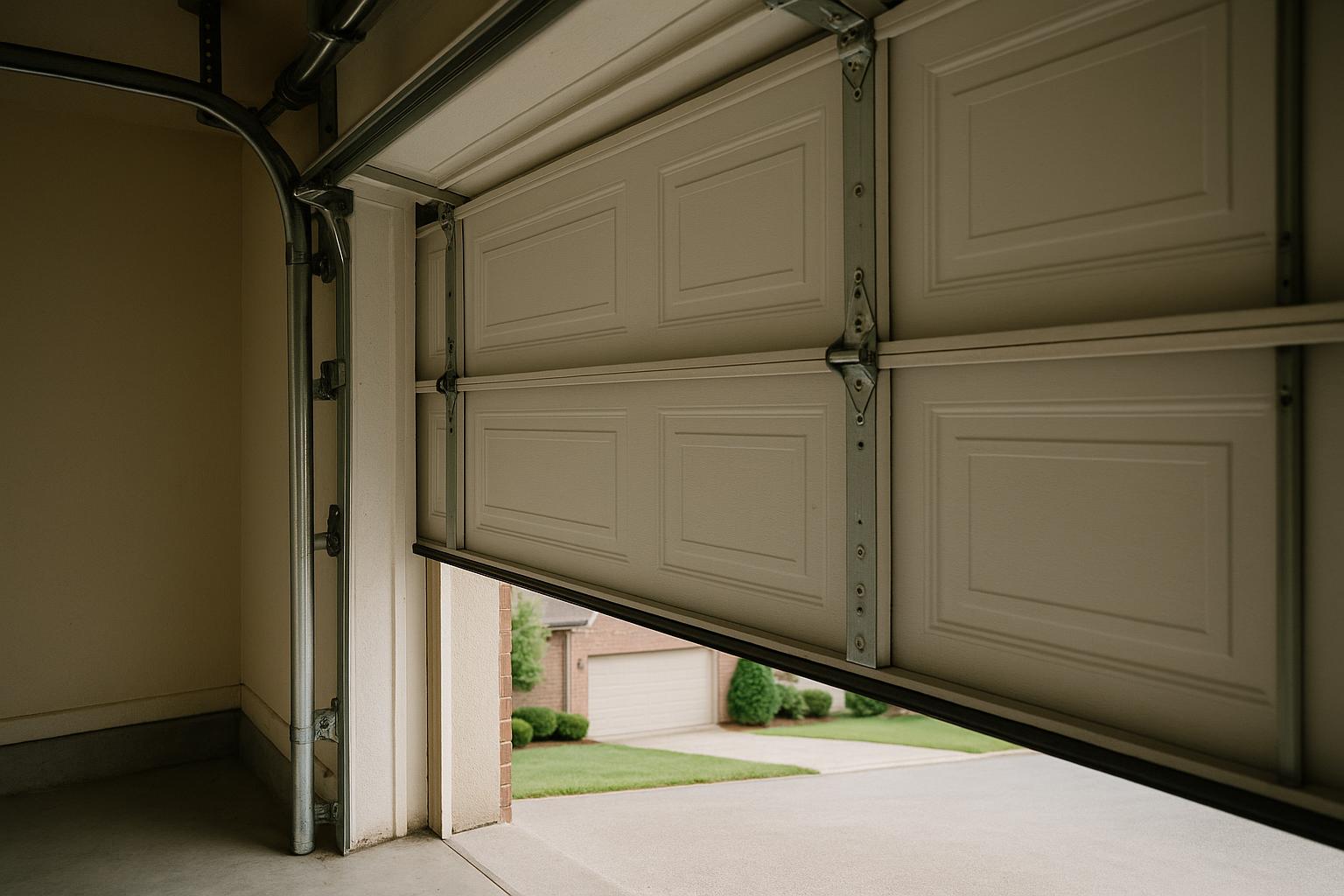
That Grinding, Squealing Garage Door Isn't Just Annoying — It Could Be a Warning
If you live in Nashville long enough, you get used to a certain level of noise — live music drifting down Broadway, the hum of construction on yet another new development, the roar of a Titans game day. But one sound you should never get used to is a loud, grinding, or squealing garage door.
A noisy garage door is one of the most common complaints we hear from homeowners across Nashville, Brentwood, Franklin, and the surrounding areas. And while it might be tempting to just crank up the radio and ignore it, that noise is usually your garage door's way of telling you something needs attention.
In this post, we'll walk you through the most common reasons your garage door is making a racket, which noises signal a serious problem, and what you can do to restore some peace and quiet to your morning routine.
Common Causes of a Noisy Garage Door
Not all garage door noises are created equal. The type of sound you're hearing can actually tell you a lot about what's going wrong. Here are the most frequent culprits:
1. Lack of Lubrication
This is the number one cause of noisy garage doors, and thankfully, it's often the easiest to fix. Over time, the moving metal parts of your garage door system — including hinges, rollers, tracks, and springs — lose their lubrication. When dry metal grinds against dry metal, you get that unmistakable squealing or grinding sound.
Nashville's humid summers and chilly winters can accelerate this process. Temperature swings cause metal components to expand and contract, which wears away lubricant faster than you might expect.
The fix: Apply a garage door-specific silicone or lithium-based lubricant to all moving parts. Avoid using WD-40 as a long-term solution — it's a solvent, not a true lubricant, and it can actually attract dirt and grime over time.
2. Worn-Out Rollers
Garage door rollers guide the door along the tracks as it opens and closes. Most standard garage doors come with steel rollers, which tend to get noisier as they age. If your rollers are cracked, chipped, or visibly worn, they're almost certainly contributing to the problem.
The fix: Consider upgrading to nylon rollers. They're significantly quieter than steel, they don't require as much lubrication, and they typically last longer. This is one of the most popular upgrades we recommend to homeowners in Murfreesboro, Hendersonville, and Gallatin who are tired of waking up the whole house every time they leave for work.
3. Loose Hardware
Your garage door opens and closes roughly 1,500 times per year. That's a lot of vibration, and over time, nuts, bolts, and brackets can work themselves loose. Loose hardware creates rattling and banging sounds that can be alarming.
The fix: Grab a socket wrench and tighten all the bolts and brackets along the door and the track. Be careful not to overtighten — you just want them snug. If you notice any stripped or damaged hardware, it's best to have a professional replace it.
4. Misaligned or Damaged Tracks
The metal tracks on either side of your garage door need to be properly aligned for smooth, quiet operation. If a track gets bumped, bent, or shifts out of alignment, the door can scrape, grind, or pop as it moves.
The fix: Visually inspect the tracks for gaps between the rollers and the rail, or for any obvious bends or dents. Minor alignment issues can sometimes be corrected by loosening the track brackets and gently tapping the track back into position. However, significant misalignment should be handled by a trained technician to avoid making the problem worse or creating a safety hazard.
5. An Aging or Unbalanced Garage Door Opener
If the noise seems to be coming from the opener unit mounted on your ceiling rather than the door itself, the opener's motor or drive mechanism may be the issue. Chain-drive openers are notoriously loud, especially as they age. The chain can also loosen over time, creating a slapping sound during operation.
The fix: If you have a chain-drive opener, tightening the chain may help reduce noise. But if your opener is more than 10-15 years old and getting progressively louder, it may be time for a replacement. Modern belt-drive openers are dramatically quieter and come with features like smartphone connectivity and battery backup — a worthwhile upgrade for any Nashville home.
6. Vibration Transferring to the Ceiling and Walls
Sometimes the garage door and opener are functioning fine mechanically, but the vibration from the system transfers into your home's structure, creating a rumbling or buzzing noise that echoes through the house.
The fix: Installing anti-vibration pads between the opener and the ceiling mount can make a surprising difference. This is a quick, affordable solution that significantly reduces the noise that travels into your living spaces.
When Noise Means Something Serious
While many garage door noises are minor annoyances with simple fixes, some sounds should prompt you to call a professional right away:
- A loud bang or snap: This could indicate a broken spring or cable, which is a serious safety concern. Do not attempt to operate the door.
- Persistent grinding even after lubrication: This may point to a stripped gear inside the opener or a severely worn component that's about to fail.
- Popping sounds from the panels: This can mean the door is binding due to a balance issue, putting dangerous stress on the hardware and the opener.
If you hear any of these sounds, it's best to stop using the door and call a professional. Garage doors are heavy — most residential doors weigh between 150 and 250 pounds — and attempting DIY repairs on high-tension components like springs and cables can result in serious injury.
The Value of Regular Maintenance
The best way to keep your garage door quiet and running smoothly is with regular maintenance. We recommend a professional tune-up at least once a year. During a maintenance visit, a technician will lubricate all moving parts, tighten hardware, inspect springs and cables, test the door's balance, and check the opener's performance.
Think of it like an oil change for your car — a small investment that prevents big, expensive problems down the road. Many of our customers in Nashville and the surrounding communities schedule their annual tune-up in the spring or fall, right before the season's temperature extremes set in.
Quiet Your Garage Door the Right Way
A noisy garage door doesn't have to be something you just live with. Whether the solution is as simple as a can of lubricant or as involved as a full opener replacement, addressing the noise now can save you from a bigger headache — and a bigger bill — later.
At Nashville Overhead Door Co, we've helped thousands of homeowners across Nashville, Brentwood, Franklin, Hendersonville, Murfreesboro, and Gallatin get their garage doors running quietly and reliably. If your door is making sounds you can't explain, give us a call. We'll diagnose the problem, explain your options in plain English, and get it fixed right the first time.